The Speech House: a courtroom in the middle of the Forest, still in session
A hotel whose dining room is a working courtroom, where the verderers of the Forest of Dean have met since the 1670s. Next door, the Cyril Hart Arboretum grows trees a plant hunter carried back from China, and over the road stand two oaks planted by Queen Elizabeth II in 1957. The Speech House, the enclosure riots, and the man they transported for tearing the fences down.

by sea, whimsee's creatorwhimsee field notes · The Speech House · 10 August 2026
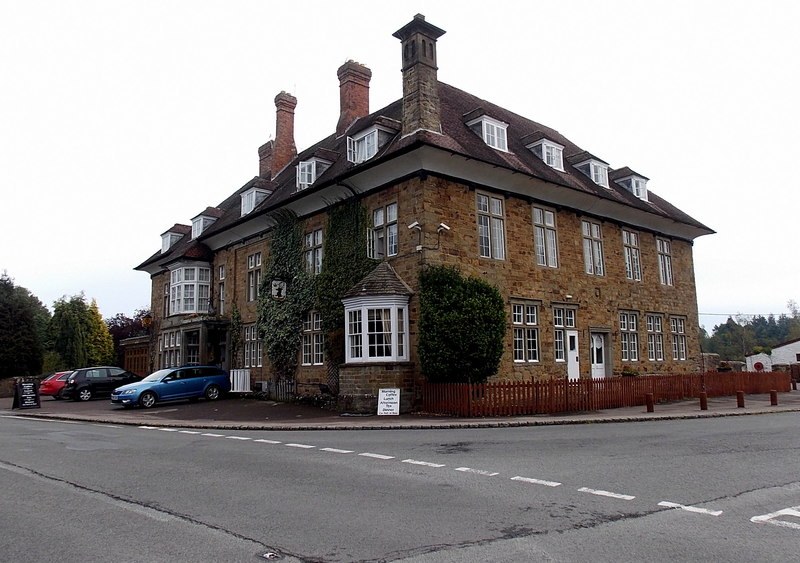
Drive the B4226 between Coleford and Cinderford and, at the exact point where the Forest stops feeling like the edge of anywhere and becomes the middle of somewhere, a large stone house appears alone among the trees. It looks like a country hotel, and it is one. It is also the seat of one of the oldest working institutions in England, and the institution was here first. The hotel happened to the courtroom, not the other way round.
Parkend's field note told the story of a village where everything got a second life. The Speech House is the other thing the Forest does: an institution so stubborn it never needed one.
The house built to hold a speech
After the Restoration, forest law came back to the Dean by act of parliament, the Dean Forest Act 1667, and the Crown put up a house to hold it: a hunting lodge for Charles II with a courtroom inside, standing at the centre of the Forest it was to govern. The sources cannot quite agree on the building's date, and the note at the end of this page enjoys that properly, but the court is on the record fast enough: the first sitting in the newly built house was a swanimote, one of the old forest courts, held before two verderers in 1676.
The name is exact, which is rare and worth savouring. This was the House of the Speech: the place a forester came to stand up and be heard. The verderers' court dealt in the two old words of forest law, vert and venison, the green things and the beasts, and in its early centuries it held powers up to and including hanging. The room still wears nineteen pairs of antlers on its walls, in case anyone forgets what the venison half meant.
The court that never stopped sitting
Around 1840 the house began a second trade as an inn, and by the late nineteenth century it was a hotel, which it remains. Most buildings would have let the old job go at that point. This one did not. The Court of the Speech still sits in its own courtroom, on average four times a year, with the original raised gallery above and the royal coat of arms on the wall, and between sittings the courtroom earns its keep as the hotel's dining room. The court's business has softened from hangings to planning applications, boar numbers and tree disease, which is gentler, and probably harder.
That was the honest division of the old Forest: the law sat here, and the day-to-day management of the woods sat at Whitemead down by Parkend, the deputy surveyor's house that is now a holiday park. Of the two, only the court never stopped.
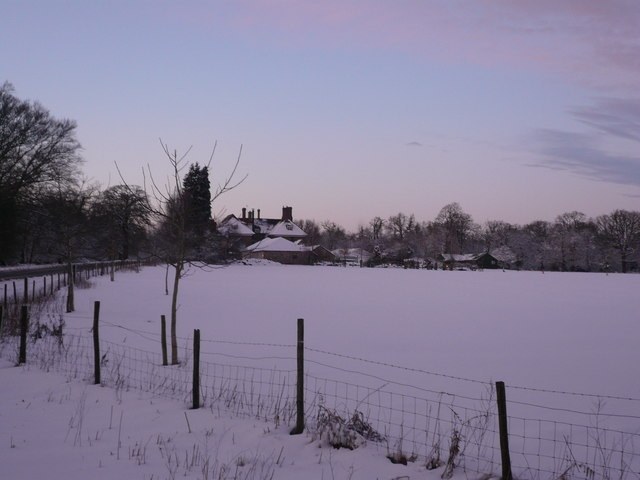
The house across its field in winter, at the hour the Forest empties. The court has sat through three and a half centuries of evenings like this. Photo: Barry Mizen, CC BY-SA 2.0, via Geograph.
The fences, and the man who tore them down
The court's polite minutes hide one story that was anything but, and it has no jokes in it.
In 1808 parliament passed an act to enclose 11,000 acres of the Forest for naval timber, and the deputy surveyor Edward Machen spent the years to 1816 fencing and planting them, Nagshead at Parkend among them. To the Crown this was forestry. To the foresters it was the loss of the open Forest their sheep, their pigs and their centuries of custom ran on, and their patience lasted one generation.
Warren James was a free miner from Parkend, born in 1792, self-taught to read and write. On 8 June 1831 he led more than a hundred foresters to the enclosure at Park Hill, between Parkend and Bream, where Machen confronted him, and the fences came down anyway. By the Friday the crowd was over two thousand strong; fifty soldiers arrived from Monmouth, looked at the arithmetic, and returned to barracks. It took reinforcements, a manhunt and a trial at Gloucester Assizes to end it. James was sentenced to death, commuted within two weeks to transportation for life, and landed in Van Diemen's Land in February 1832.
The foresters petitioned for his pardon, and Machen, the man whose fences he had levelled, supported them. The pardon was granted in February 1836. It reached James that September, and it came without passage home. He died in rented rooms in Hobart on 26 October 1841, ten years and half a world from the Forest that never forgot him. The fences he pulled down were rebuilt; the point he made about whose Forest it was has never quite been fenced back in.
A garden of other people's forests
A few minutes' walk from the house, behind a Forestry England sign off Speech House Road, the Forest keeps a collection: the Cyril Hart Arboretum, over two hundred species of tree on one gentle loop, begun in 1915 with seed and saplings the plant hunter Ernest Wilson carried home from his 1910 explorations of China. An oak forest in Gloucestershire, holding a memory of forests eight thousand miles away, is a fine thing to walk through, and in autumn, when every species turns on its own schedule, the loop is a slow firework.
It was the Speech House Arboretum until it was renamed for the man who embodied the court up the road. Cyril Hart, 1913 to 2009, was appointed a verderer in 1952 and was Senior Verderer from 1962 until his death, fifty seven years in the Forest's service, the longest anyone has held the senior seat. He was also the Forest's great historian: The Verderers and Speech-Court of the Forest of Dean, Royal Forest, the books this landscape remembers itself by, and a forestry textbook that trained thirty years of foresters. Naming the trees for the historian and the court for nobody was the right way round. The court is not a memorial. It is still sitting.
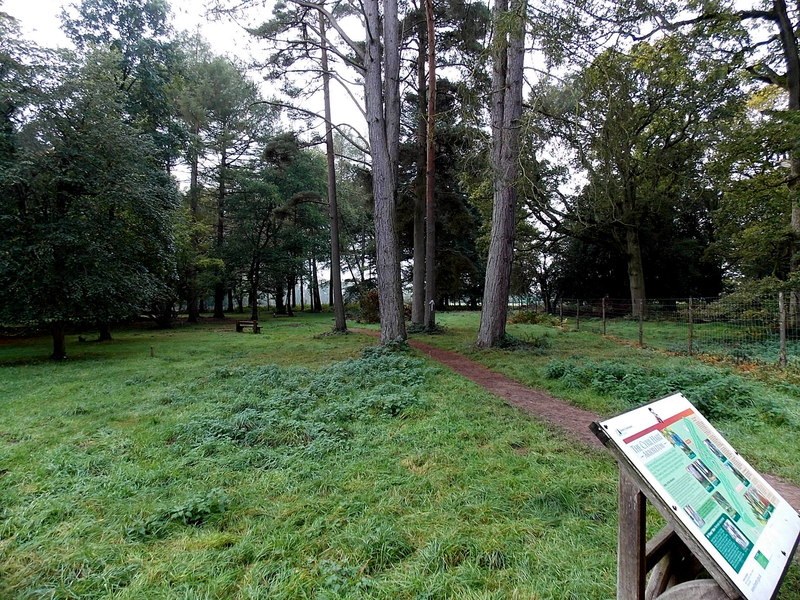
The loop path through the arboretum, interpretation lectern at the gate. Two hundred species, one short walk. Photo: Jaggery, CC BY-SA 2.0, via Geograph.
The woods around the house
The Speech House sits in the middle of everything, which was the point of putting it there, and the middle still delivers. From the Speech House Woods car park next door, paths link to the Forest of Dean Sculpture Trail, whose stained glass Cathedral hangs among the trees nearby, and to Woorgreens Nature Reserve; Beechenhurst, the trail's usual start with the café and the toilets, is just along the road. South-east from the arboretum runs the Spruce Ride, an old forestry road as straight as its name, past Speech House Lake sitting quiet in the trees, and on towards New Fancy and the Parkend country: the walking line between this field note and its companion.
The house also shares its clearing with a school. Heart of the Forest Community Special School, purpose built for children with severe and complex learning disabilities, teaches around a hundred and forty pupils from nursery age to nineteen at the Speech House itself. A courtroom, a hotel, an arboretum and a special school, all holding the same clearing. Of all the addresses such a school could have, a forest is a good one.
The road that played France
The B4226 outside the door has a screen credit. When Sex Education, Netflix's Wye-and-Dean-shot series, needed a French road for its third season, the stretch between the Speech House and Mallards Pike stood in, with the winter Forest flashing past the bus windows, and Mallards Pike itself was dressed as a French petrol station. The show borrowed this landscape for years: the riverside chalet Otis lives in is at Symonds Yat East, and the tourist board keeps a page of the locations, most of them within half an hour of this junction. These woods do steady screen work, and between takes they go back to being themselves, which no set dresser has improved on yet.
The oaks the Queen planted
On the evening of Wednesday 25 April 1957 an estimated six thousand people stood outside the Speech House to watch Queen Elizabeth II and Prince Philip plant two oak saplings over the road on the western side of the house, using stainless steel spades. The spades hang today on the east wall of the verderers' courtroom, across the road from the trees they planted.
The oaks are approaching seventy, which for an oak is early days: the old foresters' rule of thumb gives an oak three hundred years to grow, three hundred to stand and three hundred to die. Everything else about that evening, the crowd, the cars, the hats, has gone the way evenings go. The two trees are just getting started, and the court across the road expects to be in session for the whole of it.
If you go
The Speech House is on the B4226 midway between Coleford and Cinderford, about ten minutes from either. The hotel is a working hotel and the courtroom is its dining room, so seeing the antlers and the royal spades means eating there, staying there, or asking nicely at the desk at a quiet hour. The Cyril Hart Arboretum has its own free car park with two accessible spaces, a short unsigned loop path that is mostly flat and can be muddy, and all-terrain mobility scooters can be hired from the hotel. Dogs must be kept on leads in the arboretum. Beechenhurst and the sculpture trail are just along the road, and Parkend is a walk or ride south down the forest rides.
Two plain notes, and these are not jokes. The B4226 is a fast road and the Queen's oaks stand on the far side of it: cross like you mean it, and do not linger on the carriageway for a photograph. And the Forest's sheep and wild boar both wander this area; give the boar room, more room if you have a dog, and all of it in spring when there are piglets.
Phone signal here is middling on a good day. Sort your maps before you arrive.
If you are staying in the Wye Valley
You are twenty five minutes from Symonds Yat, and this makes a proper inland afternoon: the gorge in the morning, then the courtroom, the arboretum and the royal oaks in the flat green middle of the Forest. The Wye shows you what the landscape looks like. The Speech House shows you how it has been argued over, continuously, in the same room, since Charles II.
A note on this one
This article exists because the Parkend field note kept bumping into the Speech House and the enclosures and having no room to do them justice. I wanted the full telling: the house, the acts, the arboretum and the tree the Queen planted. It turned out to be two trees, which is the kind of correction this job is for.
The building's date would not settle, and it has three candidates: the hotel's own history says built in 1669, the verderers' record shows the first court held in the newly built house in 1676, and the standard reference gives construction finished in 1682, with repairs after damage in 1688. All three can be partly true of a building that took years to raise and then needed mending; this article says "the 1670s" and leaves the room, which has heard longer arguments, to hold this one too.
One story reached this page and would not verify: a local telling that the 1957 saplings were raised from an oak Prince Albert planted near the house in 1861. None of the sources this article could reach stands behind it, so it stays a telling, recorded here as one. And one figure deserves its plainness back: the crowd of six thousand at the 1957 planting is the Forest Review's estimate from its own reporting of the day, and even at half that, on an April evening in the middle of a forest, it says everything about what this house is to the people who live around it.
- What is the Speech House in the Forest of Dean?
- It is the old administrative centre of the Forest of Dean, built in the 1670s after the Dean Forest Act 1667 re-established forest law, and originally a hunting lodge for Charles II. It stands at the centre of the Forest on the B4226 between Coleford and Cinderford, and holds the courtroom of the verderers, the Forest's ancient court. The building has been an inn since around 1840 and is now the Speech House Hotel.
- Do the verderers still meet at the Speech House?
- Yes. The Court of the Speech still sits in its original courtroom, on average four times a year, discussing matters like forest management, wild boar and tree disease. The room spends the rest of its time as the hotel's dining room, with the original raised gallery and nineteen pairs of antlers on the walls.
- What is the Cyril Hart Arboretum?
- A free arboretum of over 200 tree species a few minutes' walk from the Speech House, established in 1915 with trees the plant hunter Ernest Wilson brought back from his 1910 explorations of China. Originally the Speech House Arboretum, it was renamed for Dr Cyril Hart, a verderer of the Forest from 1952 and Senior Verderer from 1962 until his death in 2009. Parking is free, a short unsigned loop path circles the collection, and dogs must be kept on leads.
- Which trees did the Queen plant at the Speech House?
- Two oaks, over the road on the western side of the house. Queen Elizabeth II and Prince Philip planted them with stainless steel spades on 25 April 1957, in front of a crowd estimated at 6,000 people. The spades hang on the east wall of the verderers' courtroom inside the hotel.
- Who was Warren James?
- A free miner from Parkend who led the Forest of Dean enclosure riots of 1831. On 8 June 1831 he led more than 100 foresters in demolishing the enclosure fences at Park Hill, and within days the crowd had grown to around 2,000. He was sentenced to death, commuted to transportation for life, and sent to Van Diemen's Land. His pardon was granted in 1836 but came without passage home, and he died in Hobart in 1841.
- Where was the Sex Education bus scene filmed?
- On the road between the Speech House and Mallards Pike in the Forest of Dean, which stood in for France in season 3 of the Netflix series; Mallards Pike itself was dressed as a French petrol station. Many of the show's locations are in this landscape, including Otis's riverside home at Symonds Yat East.
- Is the Forest of Dean Sculpture Trail near the Speech House?
- Yes. Paths link from the Speech House Woods car park to the Sculpture Trail and to Woorgreens Nature Reserve, and the stained glass Cathedral sculpture hangs among the trees nearby. Beechenhurst, the trail's usual starting point with a café and toilets, is just along the B4226.
- When was the Speech House built?
- In the 1670s, under the Dean Forest Act 1667, though the sources disagree on the exact year: the hotel's own history says 1669, the verderers' records show the first court held in the newly built house in 1676, and the standard reference gives construction as finished in 1682. The building was damaged in the Revolution of 1688 and repaired soon after.
everything above is checked. if we could not find a source for something, it is not in here.
- The Forest of Dean Verderers: the courtroom in the Speech House, the royal spades and the antlers
- The Speech House Hotel: its own history, from hunting lodge to courtroom to dining room
- Speech House, Wikipedia: the Dean Forest Act 1667, the 1682 completion and the 1688 damage
- Forestry England: the Cyril Hart Arboretum, Ernest Wilson's trees and the loop trail
- Cyril Edwin Hart, Wikipedia: verderer from 1952, Senior Verderer 1962 to 2009, and the books
- Warren James, Wikipedia: the 1831 riots, the trial, the transportation and the pardon that came too late
- Forest of Dean, Wikipedia: forest law re-established in 1668, the 1808 Act's 11,000 acres, and the free miners
- The Forest Review: when Queen Elizabeth II came to the Forest of Dean, 25 April 1957
- Sungreen local photo archive: the Queen planting an oak opposite the Speech House, 1957
- Forestry England: Speech House Woods, and the links to the Sculpture Trail and Woorgreens
- Visit Dean Wye: where Sex Education filmed, including the France bus scene by the Speech House
- Heart of the Forest Community Special School, at the Speech House