A Wye Valley summer: a poem with the date in its title, peregrines on the clock, and the truth about the water
The most famous summer walk in English poetry happened here, and the date is in the poem's title: 13 July 1798. Summer in the Wye Valley still works the same way, boats on the river, peregrines over the gorge until August, cool climbs under full canopy, and an abbey open to the sky. What the season offers, what the crowds do, and an honest word about the river itself.
whimsee field notes · Tintern Abbey · 6 August 2026
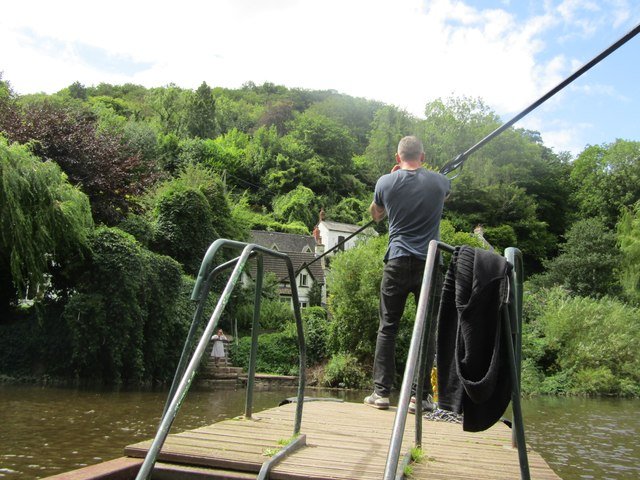
The most famous summer walk in English poetry happened here, and we know the date because the poet put it in the title. "Lines Composed a Few Miles above Tintern Abbey, On Revisiting the Banks of the Wye during a Tour. July 13, 1798." William Wordsworth and his sister Dorothy spent four July days walking this valley, Tintern up through Monmouth to Goodrich Castle and back, then down to Chepstow and home by boat, and somewhere in it he began composing in his head. He kept composing for the whole journey and wrote nothing down until he reached Bristol, where the poem arrived complete, and it went into Lyrical Ballads at the last moment as its closing poem.
He called it "sylvan Wye! thou wanderer thro' the woods." A wanderer, which is a word we have some sympathy with.
The summer that invented the day out
Wordsworth wasn't being original by turning up here in July. He was joining a queue.
From about 1750 the Rector of Ross-on-Wye kept a boat for floating his guests downriver, and by the 1770s the Wye Tour was a fixed two-day excursion: Ross to Monmouth, Monmouth to Chepstow, taken in the warm months by anybody with the means and the curiosity. William Gilpin did it in 1770 and turned it into a book in 1782 that is generally reckoned the first tour guide published in Britain. At the Tour's height, eight to ten pleasure boats a day were leaving Ross. The Wye Valley National Landscape, who look after the valley now, call this the birthplace of British tourism, and it is their claim to make. The packaged scenic holiday was worked out on this water two generations before anyone had thought of a seaside resort.
The modern version costs less and gets you wetter. A public right of navigation has existed on the Wye since an Act of Parliament in the late seventeenth century, and the traffic these days is canoes, kayaks and paddleboards, with something over a hundred miles of paddleable river running down from Hay, hire outfits at all the honeypots, and a few small pleasure boats still working out of Symonds Yat. The rapids below Symonds Yat East host slalom racing.
Peregrines at Symonds Yat Rock, April to August
Above the busiest bend of the whole river, the gorge runs its own summer timetable. The peregrine watchpoint at Symonds Yat Rock operates from April to August, volunteers, telescopes, and a cliff across the gorge where peregrine falcons have nested every year since 1982. By high summer the year's young are flying, chasing each other along the cliffs while they work out what those wings are actually for, and the watch closes for the year at the end of August, which makes these weeks the last call. The Rock, its Iron Age fort, its hand ferries and its dynamite-wielding Victorian reverend have a full field note of their own.
Climbing in the shade: the 365 Steps and the Piercefield walks
The valley's other summer gift is architectural: full canopy. The woods of the lower gorge close over their paths from May, and the climbs that punish in open country become cool work here.
The 365 Steps up the Wyndcliff to the Eagle's Nest viewpoint is the best of them, a Victorian staircase through deep wooded shade to the highest point on the Monmouthshire bank, with the whole lower valley and the Severn laid out at the top. Nobody agrees how many steps there are, which is its own story, told in the Wyndcliff field note. And the Piercefield walks out of Chepstow, the cliff path that helped invent the British day out, run almost entirely under trees, past the Giant's Cave, which stays cave-cool in any weather at all.
The valley's summer nurseries: lesser horseshoe bats and July butterflies
Some of the valley's summer is invisible and worth knowing about anyway. Thirteen species of bat live here, and the star is the lesser horseshoe, a bat that weighs about the same as a ten pence piece. The Wye Valley holds around a quarter of Britain's entire population, the greatest concentration in the country, and summer is their nursery season, when the females gather in old barns, outbuildings and church roofs to raise the year's single pups. The largest known nursery roost in the country is in the old church at Penallt, above the river between Monmouth and Tintern. Walk a valley lane at dusk in July and the small fast flickers along the hedge line are the tenants of those roofs, out earning a living. The roosts themselves are protected and best left to their tenants; the dusk performance is free.
Daylight has its own specialists. In July the sunny rides and clearings of the big woods belong to the silver-washed fritillary, a large marmalade coloured butterfly on the wing from late June to the end of August, with white admirals gliding in the same glades. And at Lancaut, the wildlife trust reserve in the gorge's last great loop before Chepstow, the old quarries and the limestone ridge carry their summer wildflowers under cliffs where the peregrines and ravens nest.
An abbey open to the sky: Tintern on a summer evening
Tintern Abbey is the valley's set piece, and summer is when the architecture does its trick. Founded 1131, rebuilt from 1269 into one of the great Gothic churches of Britain, surrendered in the first round of the dissolution in 1536, and roofless ever since.
Roofless is the important part. The nave is lit by whatever the sky happens to be doing, and on a long July evening the sky is doing quite a lot. The seven-lancet west window catches the low light. The grass floor holds the warmth of the day. The Victorians worked this out well before us and used to come by train in their thousands specifically to watch the moon come up through the windows. The trains stopped. The building carries on.
The river, honestly: is it safe to swim in the Wye?
The Wye is not well, and any summer piece about this valley that skips it is selling you something.
In May 2023 Natural England downgraded the river's protected status to unfavourable and declining, citing what years of measurement had already shown: too much phosphate, most of it draining from the manure of an intensive poultry industry that keeps an estimated twenty million chickens in the catchment at any one time, with sewage contributing its share. The salmon are in decline. The water crowfoot beds that waved under the Wye Tour's boats have thinned. A legal claim on behalf of more than four thousand people who live along the river, the largest environmental pollution claim of its kind in the UK, is working through the High Court as this is written.
So what does that mean for a summer visit? Being on the water is fine. Canoes have no opinion about phosphate, and paddling the Wye remains the oldest tourist pleasure in the country.
Swimming is a harder conversation. The Warren at Hay-on-Wye became a designated bathing water in 2024 after a community campaign, and the citizen scientists of Friends of the River Wye test it weekly through the season. In late June 2026 their sample came back at more than three times the safe-bathing threshold for E. coli, the highest reading they had taken there. Those numbers move week to week. If a river swim is in your plans, go and read their latest results rather than trusting a hot day and a good mood, and keep the water out of your mouth either way.
Worth saying that the people doing that testing are volunteers with kit and spreadsheets, and joining them is the most practical thing anyone who loves this valley can actually do about it.
If you go
Summer weekends are the valley at full stretch. Symonds Yat's lanes and car parks fill by mid-morning, and Forestry England's advice for the Rock is weekdays outside the school holidays, or before ten and after four at weekends. Tintern and the A466 run to the same rhythm.
Eight in the morning in August, this is the valley the Wye Tour was selling. By one in the afternoon it is mostly a queue.
If you are staying in the Forest of Dean
The Forest is the far bank of everything in this article. Symonds Yat Rock is reached from the Forest side. The Wyndcliff and Piercefield are twenty minutes from Lydney across the border bridges. Both banks are one designated landscape, whatever the county signs suggest, so mix the two freely. The Forest's own summer, ponds and whinberries and that birthday-present swimming pool, has a companion field note.
A note on this one
The Wordsworth chronology was taken from the Wordsworth Trust's record of the 1798 tour rather than from memory, and that turned out to matter. The internet routinely has him composing the poem inside the abbey, which he never claimed. The title says above Tintern. His own note says he finished it in his head before reaching Bristol and then changed not a line.
The navigation right gets dated to 1662 all over the place online. The sources this article trusts say only "the late seventeenth century", so that is what it says here.
River health figures come from the named conservation bodies and the volunteer testers. They change weekly. Read them fresh rather than trusting the snapshot on this page.
"Birthplace of British tourism" is the National Landscape's phrase for the Wye Tour, quoted as their claim rather than adopted as ours.
other places nearby somebody has already marked in the app.
- Is it safe to swim in the River Wye?
- Treat it with caution. In May 2023 Natural England downgraded the river's protected status to unfavourable and declining, largely over phosphate from intensive poultry in the catchment. The Warren at Hay-on-Wye is a designated bathing water and Friends of the River Wye test it weekly in season; in late June 2026 their sample came back at more than three times the safe-bathing threshold for E. coli. Check their latest results before swimming, and keep river water out of your mouth. Canoeing and paddleboarding are unaffected.
- Where did Wordsworth write Tintern Abbey?
- Not in the abbey. The full title is Lines Composed a Few Miles above Tintern Abbey, On Revisiting the Banks of the Wye during a Tour. July 13, 1798. He composed it in his head over four days of walking the valley with his sister Dorothy and wrote nothing down until he reached Bristol. It went into Lyrical Ballads as the closing poem.
- What is there to do in the Wye Valley in summer?
- Canoeing and paddleboarding on the river, which has a public right of navigation and over a hundred miles of paddleable water from Hay downstream. The peregrine watchpoint at Symonds Yat Rock runs April to August. The wooded climbs stay cool under full canopy, including the 365 Steps up the Wyndcliff and the Piercefield walks out of Chepstow. Tintern Abbey is roofless, so it is at its best on a long summer evening.
- What was the Wye Tour?
- The first packaged scenic holiday in Britain. From around 1750 the Rector of Ross-on-Wye kept a boat to float guests downriver, and by the 1770s it was a fixed two-day excursion from Ross to Monmouth to Chepstow. William Gilpin's 1782 book about it is generally reckoned the first tour guide published in Britain. At its height eight to ten pleasure boats a day left Ross.
- Where can you see lesser horseshoe bats in the Wye Valley?
- The valley holds around a quarter of Britain's entire lesser horseshoe population, the greatest concentration in the country, and summer is their nursery season. The largest known nursery roost in Britain is in the old church at Penallt. The roosts themselves are protected and best left alone; walk a valley lane at dusk in July and you will see the bats out hunting along the hedge lines.
everything above is checked. if we could not find a source for something, it is not in here.
- Lines Composed a Few Miles above Tintern Abbey (Representative Poetry Online, University of Toronto): the poem, in full, with its full title
- The Wordsworth Trust: the movements of William and Dorothy Wordsworth, including the July 1798 Wye tour
- Wye Valley National Landscape: the Wye Tour, which it calls the birthplace of British tourism
- Cadw: Tintern Abbey, its founding and its fall
- Forestry England: Symonds Yat Rock, the peregrine viewpoint and when it is quietest
- Wye and Usk Foundation: navigation on the Wye, and the late seventeenth century Act behind it
- Wye Valley National Landscape: mammals, and the valley's quarter share of Britain's lesser horseshoe bats
- The Wildlife Trusts: the silver-washed fritillary, on the wing late June to the end of August
- Gloucestershire Wildlife Trust: Lancaut, the gorge reserve near Chepstow
- The Wildlife Trusts: the River Wye SSSI downgraded to unfavourable declining, May 2023
- Herefordshire Wildlife Trust: what is polluting the River Wye
- Friends of the River Wye: the citizen water testing at The Warren, and what it found in June 2026
- Leigh Day: the River Wye pollution claim, the largest of its kind in the UK
whimsee is a little app for wandering. people leave small glimmers of wonder in places like this one, and other people go and find them. no feed, no algorithm, just a reason to go outside.
see how it works